Why fixture type comes before fixture style
Most people shop lighting backwards: they fall for a style, then discover it does not fit the ceiling, the room or the job. The better order is type first, style second. Each fixture type solves a specific lighting problem — general light, focused light, soft fill light or portable light — and knowing which problem you are solving narrows the search immediately.
Here is the short version, then each type in detail:
| Fixture type | Best at | Typical rooms |
|---|---|---|
| Pendant lights | Focused light over tables and islands; style statement | Dining, kitchen island, bedroom bedside |
| Ceiling lights | Even general light; fits low ceilings | Hallways, bedrooms, kitchens, baths |
| Wall lights | Soft fill light where floor space is scarce | Bedside, hallways, flanking mirrors |
| Table lamps | Portable mid-height warmth; flexible layering | Living room, bedroom, sideboards |
Pendant lights: the focused statement
A pendant hangs from the ceiling and concentrates light — and attention — on one spot. That makes it the natural choice over dining tables, kitchen islands and breakfast nooks, and a surprisingly good bedside alternative to table lamps.
- Choose a pendant when the fixture should mark a zone or anchor a surface: over the table, along the island, above a nightstand.
- Height matters more than style. Pendants live in the 30–36 inch band above surfaces; see our hanging height guide for the details.
- Groups beat singles for long surfaces. Two or three pendants evenly spaced light an island more evenly than one wide piece.
Browse silhouettes from single globes to clustered forms in our pendant lights collection.
Ceiling lights: the everyday workhorse
Ceiling-mounted fixtures — flush or semi-flush — spread light evenly across a room and sit close to the ceiling, which makes them the go-to general light for hallways, bedrooms, kitchens and bathrooms, and the only sensible choice under low ceilings around 7–8 feet.
- Choose a ceiling light when the job is “make the whole room usable,” not “create a focal point.”
- Flush vs semi-flush: flush mounts touch the ceiling for the tightest clearance; semi-flush hang a short distance below and look a little more decorative.
- They layer beautifully. A discreet ceiling light covers general brightness while pendants, sconces and lamps handle character and mood.
Our ceiling lights lean toward soft, sculptural forms that read as design rather than infrastructure.
Wall lights: light exactly where you need it
Wall-mounted fixtures put light at mid-height — the most flattering level — without occupying any floor or table surface. They are the problem-solvers of home lighting:
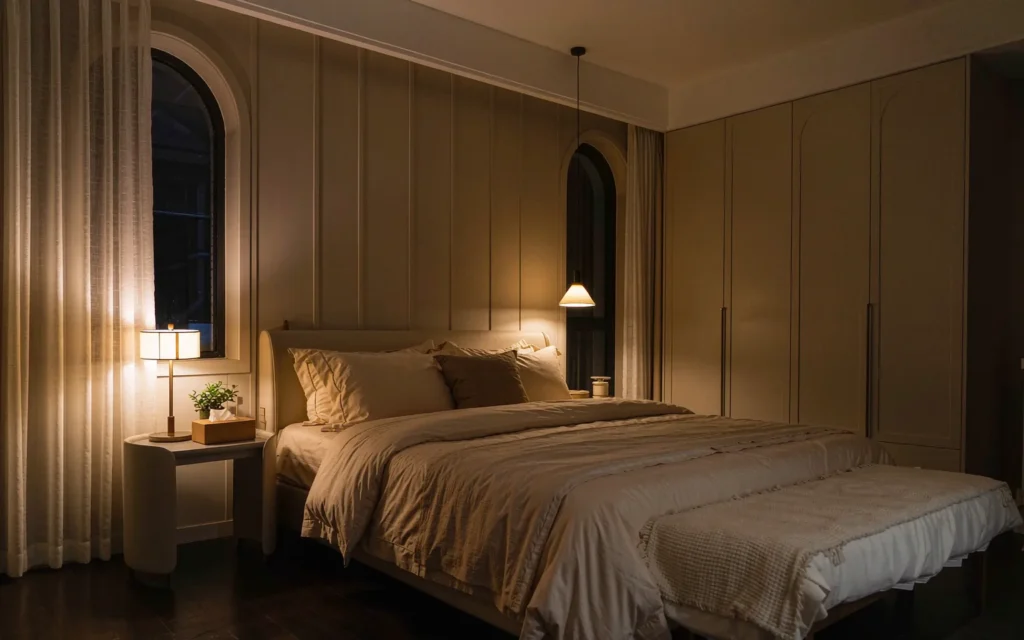
- Bedside: a wall light frees the nightstand and points reading light at the book, not the pillow.
- Hallways and stairs: even, low-level light where a ceiling fixture would leave the walls dead.
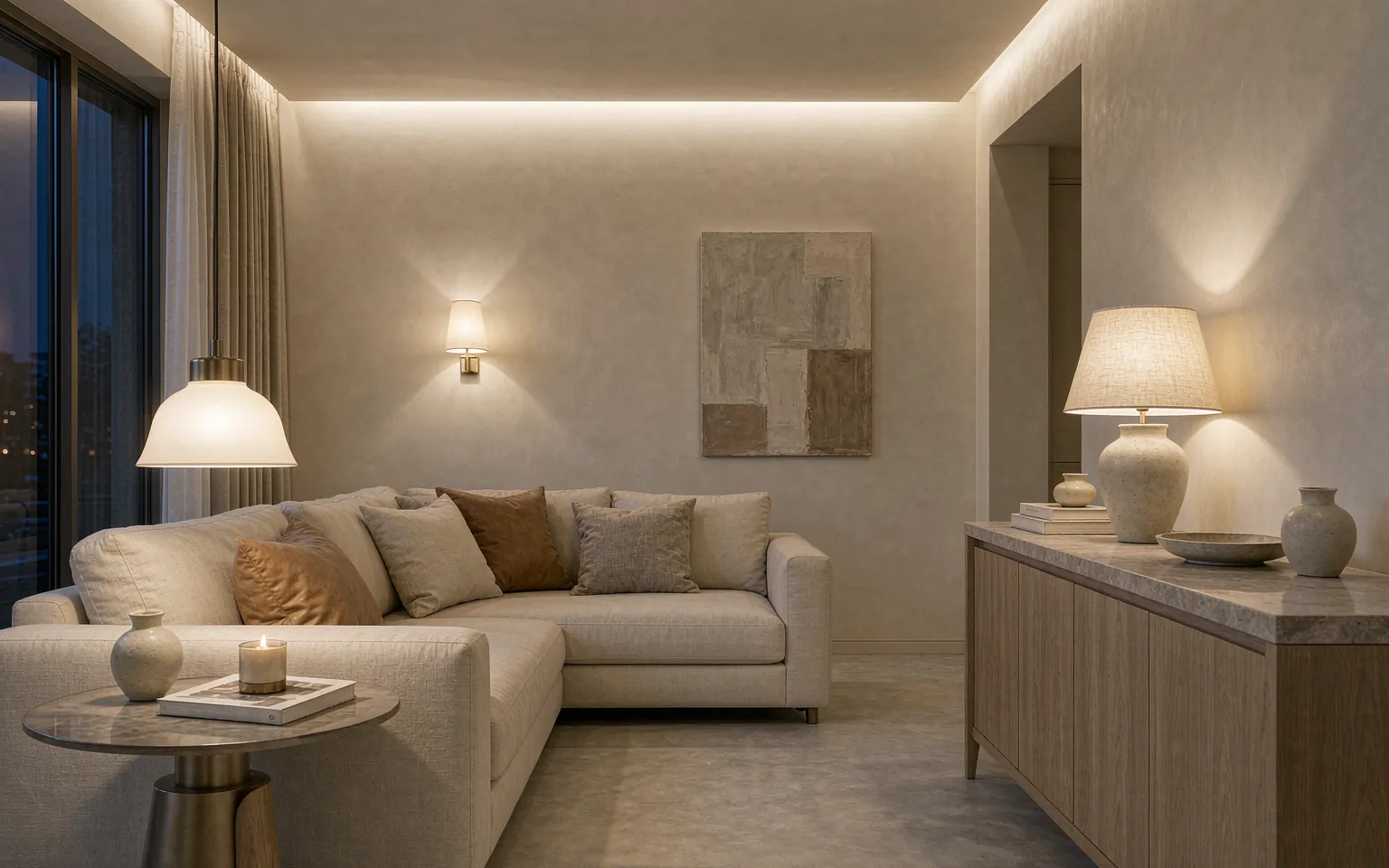
- Flanking mirrors and artwork: two sconces beside a mirror give balanced, shadow-free light; a picture-style fixture lifts art in the evening.
See placements and finishes in our wall lights collection.
Table lamps: the flexible layer
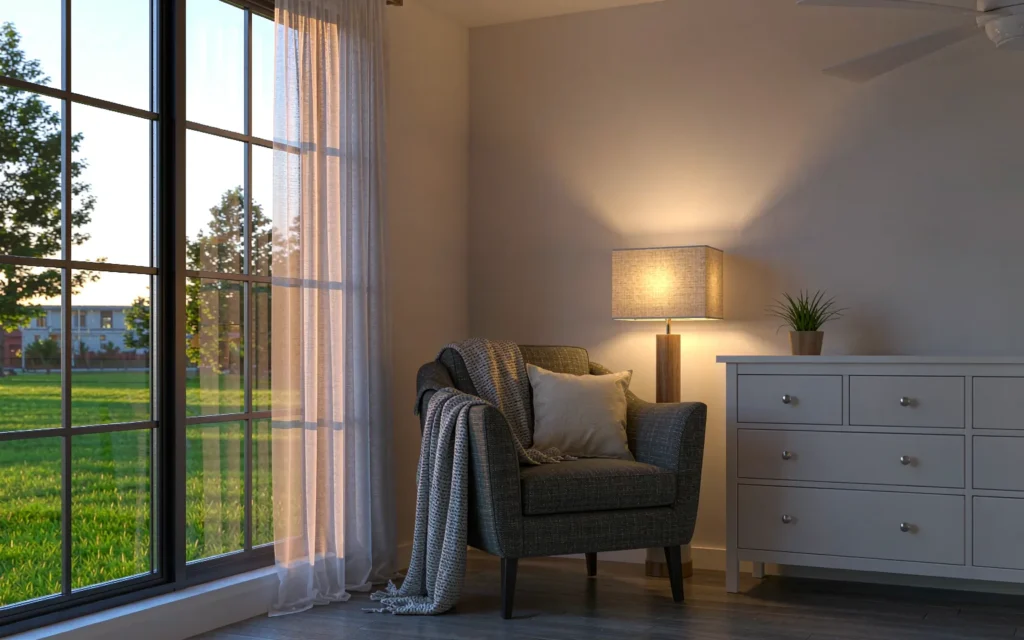
Table lamps are the only fixtures you can rearrange at will. They bring light down to seating height, which is why a living room with a good ceiling light still feels unfinished until a lamp glows in the corner.
- Choose a lamp when you want warmth and flexibility: sideboards, console tables, nightstands, reading corners.
- They fix “top-heavy” rooms. If a room feels bright above and dim below, mid-height lamp light rebalances it instantly.
- Renters love them for the same reason: real atmosphere with zero wiring.
Our table lamps are sized to layer under — not compete with — your overhead fixtures.
How to combine them: the three-layer rule
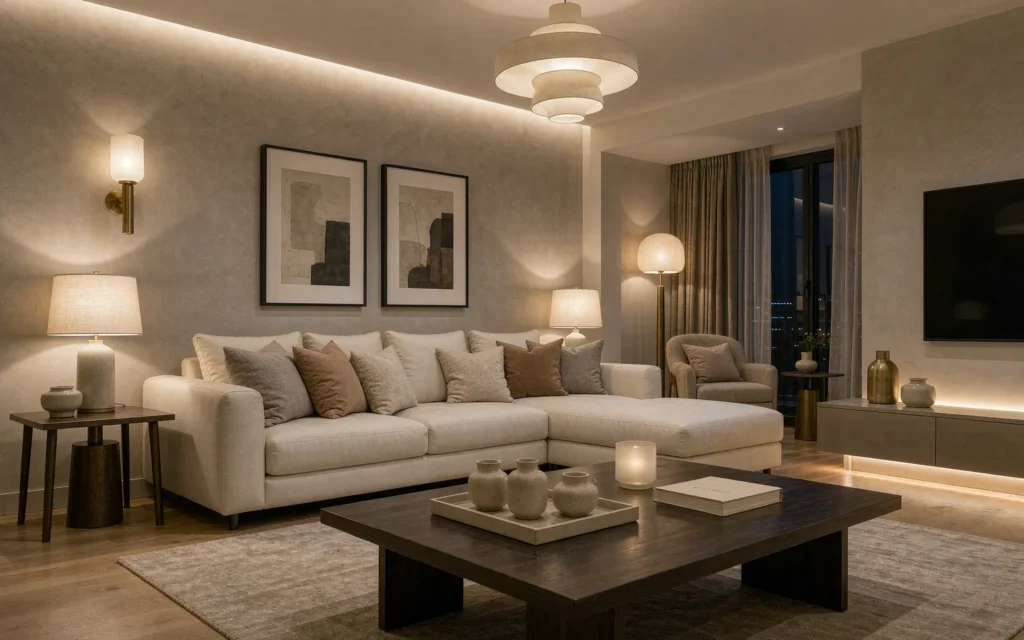
Well-lit rooms almost always have three layers, and each fixture type maps onto one:
- Ambient — the general light that makes the room usable, usually the ceiling fixture.
- Task — focused light where things happen: pendants over the island, a wall light over the nightstand.
- Accent and mood — the soft layers: table lamps, sconces flanking a mirror, light aimed at art.
You do not need all three layers everywhere. But if a room feels wrong and you cannot say why, it is almost always missing a layer — usually the mid-height one.
For a worked example, see how the layers come together in our dining room lighting guide.
Frequently asked questions
Pendant or ceiling light — which one for a dining table?
A pendant, almost always. It marks the table and hangs at a height where it shapes the conversation area. Ceiling lights spread evenly and belong in the parts of the home where no focal surface exists.
How high should a bedside wall light be mounted?
Roughly the top of the headboard, or a little above — high enough that the light lands on your book, low enough to reach the switch from bed.
Can I mix fixture styles across one open-plan space?
Yes, within one visual family. Keep one element consistent — metal finish, glass type or overall era — and let shapes vary. One style element repeated across pendant, wall and lamp reads as curated rather than random.
What if my room’s proportions defeat standard fixtures?
Very low ceilings, very tall foyers, or long narrow rooms sometimes need made-to-measure suspension lengths or scaled-up forms. That is what our custom lighting service is for — send us your room dimensions and we will work from there, or contact us directly.